

Business Operation · 2025
In this section22 topics
- Corporate Information4 items
- Dividend Policy2 items
- Major Shareholders2 items
- Business Strategies Overview6 items
- Material Changes & Developments1 item
- Use of Proceeds from Securities Offerings1 item
- Commitments Made in the Registration Statement1 item
- Group Operating-Structure Policy1 item
- Companies Where the Company Holds ≥10%1 item
- Shareholders with Potential Conflict of Interest1 item
- Relationships Among Major Shareholders2 items
- Shareholders' Agreement1 item
- Shareholding Diagram (Group Structure)2 items
- Income Structure3 items
- Product / Service Characteristics3 items
- Research & Development6 items
- Assets Used in the Business6 items
- Marketing Policy & Competition3 items
- Procurement of Products & Services8 items
- Projects Under Construction1 item
- Debentures & Bills of Exchange1 item
- Convertible Securities1 item
Corporate Information
Company Name
THAI PLASPAC PUBLIC COMPANY LIMITED
Telephone
0-2897-2250-1
Website
www.tpacpackaging.com
secretary@tpacpackaging.com
Dividend Policy
Dividend Policy
The Company has a dividend payment policy at the rate not less than 30 percent of net profit after corporate income tax and appropriation to legal reserve. However, the board of directors may consider adjusting the dividend payment depending on liquidity requirement, cash flow requirement for expansion and investment and other requirement in the future.
Historical Dividend Payments
| This Year | Last Year | 2 Years Ago | 3 Years Ago | 4 Years Ago | Metric | Description |
|---|---|---|---|---|---|---|
| 1.46 | 1.27 | 1.5 | 0.98 | 0.47 | Net profit per share (Baht : Share) | Net profit per share (baht : share) |
| 0.44 | 0.38 | 0.45 | 0.29 | 0.14 | Dividend per share (Baht : Share) | Dividend per share (baht : share) |
| 0 | 0 | 0 | 0 | 0 | Dividend stock ratio (Number of original shares: dividend shares) | Ratio of stock dividend payment (existing share : stock dividend) |
| 0 | 0 | 0 | 0 | 0 | Dividend share value per share (Baht : Share) | Value of stock dividend per share (baht : share) |
| 0.44 | 0.38 | 0.45 | 0.29 | 0.14 | Total dividend payment value (Baht : Share) | Total dividend payment (baht : share) |
| 30 | 30 | 30 | 30 | 30 | Dividend payout ratio to net profit (%) | Dividend payout ratio compared to net profit (%) |
Business Strategies Overview
Chairman's Message
Message from the Chairman of the Board
Dear Shareholders,
I am pleased to present the Annual Report of Thai Plaspac Public Company Limited ("TPAC") for the fiscal year 2025.
As I reflect on the past year, I am struck by the contrast between the turbulence of the world around us and the quiet determination of the people within TPAC. The global economy experienced its most difficult period in well over a decade outside of the pandemic years and yet our company emerged stronger with improved earnings, healthier balance sheet and a broader geographic footprint than we began with. The result is not by any coincidence but through a focused strategy improvised over the years, and a team that has internalized what it means to execute with discipline under pressure.
Key Progress and Achievements
On the financial front, our performance in 2025 demonstrated the resilience of our business model. While reported revenue saw a modest decline, our profitability improved in meaningful ways. Core earnings per share grew over the prior year, margins expanded, and our net debt-to-equity ratio continued its steady decline through organic cash generation.
On the strategic front, the year's most significant achievement was the expansion of our manufacturing footprint to 19 production plants across five countries. In Malaysia, we completed the acquisition of Super Uniart, doubling our presence in a market that has consistently demonstrated both operational quality and strategic importance. In the UAE, we commenced development of a new facility in the SAIF Zone, extending our capacity ahead of anticipated demand growth from the Gulf's expanding consumer economy. These are not reactive moves, they are the continuation of a deliberate, long-term plan to position TPAC as Asia's leading niche packaging specialist.
Our digital transformation continued in earnest. The global rollout of SAP S/4HANA starting with India is progressing well, and our Customer Relationship Management platform is on track for full stabilization. These investments will not show their full value in a single year's financial statements but they will define our ability to scale, integrate acquisitions, and serve customers with increasing sophistication over the decade ahead.
Navigating Geopolitical and Macroeconomic Headwinds
2025 was a year defined as much by what happened outside our factories as within them. The geopolitical tensions increased with intensification of Ukraine and Russia war and numerous other regional conflicts which played a defining role in input prices and reordering of global supply chains. Closer home, the Thailand-Cambodia border tensions that emerged through the year created demand softness in our home market, as customers along the eastern corridor paused or reduced orders. And the broader global economic slowdown driven by trade policy fragmentation, weakening Chinese consumption, and compressed business confidence across much of Asia created an operating environment that tested every business in our sector.
TPAC's response was to hold the line on the things within our control: costs, capital discipline, and relentless customer focus. Our geographic diversification spanning Thailand, India, the UAE, Malaysia, and the Philippines proved its strategic value this year. When one geography faced headwinds, others provided cushion.
The Urbanization Opportunity: Long-Term Confidence
Beyond the immediate challenges of 2025, I want to speak about our long-term conviction. The megatrend that underpins TPAC's growth strategy is not geopolitical, it is demographic. Asia is urbanizing at a scale that the world has never seen before. Urban consumers are the consumers who demand packaged goods: safe, hygienic, shelf-ready, and sustainably produced. In India, the Philippines, Vietnam, and across the Gulf, hundreds of millions of people are entering the consuming middle class over the coming decade.
These are the markets where TPAC operates. These are the customers we serve. And the categories we supply F&B, pharmaceutical, and personal care are among the most resilient in any economic environment, because they serve essential human needs. I have great confidence that the macro current flowing through our geographies over the next ten to fifteen years will carry TPAC forward, provided we continue to execute with the same discipline and focus that has defined our growth since 2016.
Advancing Sustainability and Strengthening Governance
Sustainability remains at the core of our strategy, and in 2025, it also became an increasingly important competitive advantage. As regulatory frameworks around packaging tighten globally from the European Union's Packaging and Packaging Waste Regulation to India's Extended Producer Responsibility enforcement and UAE sustainability standards our commitment to 100% recyclable mono-material formats positions TPAC on the right side of the transition. Customers who once viewed sustainability as a preference are increasingly treating it as a supply chain requirement.
Our Malaysia business was once again recognised by the Federation of Malaysian Manufacturers for its commitment to environmental sustainability under the S.H.E Best Practices in Environmental Sustainability Project. We continued our investment in renewable energy across our facilities, including solar panel installations and energy-saving technologies. These initiatives reduce our environmental footprint and, in a world of volatile energy costs, reduce our operational exposure as well.
Our ongoing commitment to corporate governance was reflected in the maintenance of our "Excellent" Corporate Governance rating and the achievement of an "AA" rating in the SET ESG Ratings. These recognitions matter to me not because of the recognition itself, but because of what they represent: a company that takes seriously its obligations to shareholders, employees, customers, communities, and the environment alike.
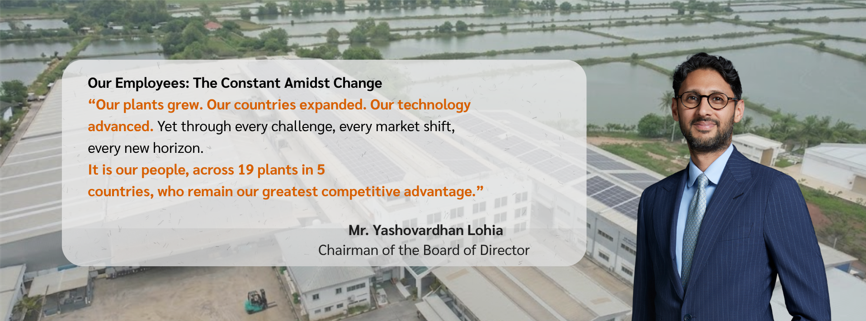
Our Employees: The Constant Amidst Change
In a year as demanding as 2025, I find myself returning again and again to the same thought: none of this is possible without the people who show up every day across our 19 production plants and bring genuine commitment to their work.
Our employees navigated foreign exchange pressures, geopolitical uncertainty, seasonal demand swings, and the complexity of new system implementations all while maintaining the quality, reliability, and customer service standards that define the TPAC brand. We continued to invest in their development through training programs and organisational strengthening across all geographies, because we believe a company that grows faster than its people is not truly growing at all. The investment in our team is, ultimately, the most important investment we make.
Looking Ahead
We enter 2026 with a stronger balance sheet, a larger and more diversified manufacturing footprint, improving digital capabilities, and a set of market tailwinds urbanization, sustainability transitions, rising of Asian consumption that I believe will define the packaging industry's next decade. The global economy may remain uncertain for some time, but TPAC has demonstrated, through most testing conditions in its lifecycle, that our model is robust and our direction is right.
Our focus on emerging markets, disciplined capital allocation, and a deepening specialisation in high-niche, sustainable packaging formats position us well for what lies ahead.
Our Appreciation
In closing, I would like to express my heartfelt appreciation to our shareholders for your continued trust and support throughout this year. The confidence you have placed in TPAC's strategy and leadership is not something we take lightly, and it is something we work every day to deserve.
I also wish to thank our customers, our business partners, and the communities in which we operate, for the relationships that make this company what it is today. And to our Group CEO and the entire TPAC team across five countries: thank you for your unwavering commitment.
With your continued support, I am confident that TPAC will continue to grow, to improve, and to become the global packaging specialist we have set out to be.
Warm regards,
Yashovardhan Lohia
Chairman of the Board of Directors
Thai Plaspac Public Company Limited
Vision
To Be a Company Whose Innovations Positively Impact Our World, and a Place Attractive to the Most Passionate Packaging Minds.
Mission
To Collaborate Passionately, Always Showing Our Customers What’s New.
Values
1.Obsess over product
Manufacturing first, Product first.
2.Lifelong learners
Always improving. Always learning. Never finished.
3.In data we trust
If you can't measure it, you can't improve it.
4.Dream
It can only start with a dream.
5.Customers Talk, We Listen
Customer input must be amplified internally.
Objectives
Produce high-quality plastic packaging that comprehensively meets the needs of customers across various industries
Develop environmentally-friendly packaging innovations by increasing the use of recycled materials, bioplastics, and biodegradable plastics
Reduce environmental impact through improving production processes, reducing waste, and decreasing energy consumption
Create maximum customer satisfaction through product quality, on-time delivery, and excellent service
Strengthen competitive capabilities with modern technology and continuous personnel development
Expand customer base and markets both domestically and internationally in a sustainable manner
Conduct business ethically with responsibility towards society and the environment, following good governance principles
Generate good returns for shareholders and achieve stable long-term growth
Goals
Business Goals
Continuously increase market share within target customer segments.
Expand the customer base across various industries, such as food, cosmetics, and manufacturing.
Increase company revenue and profitability in a sustainable manner.
Expand markets both domestically and internationally.
Environmental Goals
Reduce the use of fossil-based plastics and increase the proportion of recycled materials and bioplastics.
Develop packaging that is 100% reusable or recyclable.
Reduce greenhouse gas emissions from production and supporting processes.
Minimize production waste and increase waste recovery and reuse.
Promote activities and provide education to employees to raise awareness of waste management and responsible resource utilization.
Innovation Goals
Develop new environmentally friendly packaging products.
Improve production processes to enhance efficiency and optimize resource utilization.
Invest in and adopt modern technologies and automation in manufacturing processes.
Promote research and development (R&D) to continuously create innovation.
Business Strategies
Innovation Strategy
The company prioritizes continuous research and development of packaging innovations, focusing on creating environmentally friendly products through the development of biodegradable and high-performance materials. We have a team dedicated to researching and designing new packaging formats that meet market needs and sustainability requirements.
Marketing and Business Expansion Strategy
We plan to systematically expand our business scope, focusing on market expansion into ASEAN countries and the Asian region, while building business partnerships with leading companies in the food, beverage, and consumer goods industries. Additionally, we aim to develop comprehensive packaging design services to add value and differentiation for our customers.
Sustainability Strategy
The company aims to fully implement the Circular Economy concept in its production processes, with goals to reduce single-use plastics, promote recycling, and develop low-carbon products, while committing to obtaining international environmental certification standards.
Digital and Technology Strategy
The company emphasizes the implementation of modern technologies in its operational processes, including the use of automation and artificial intelligence in production, developing digital platforms to provide comprehensive customer services, and creating advanced technology-based quality control monitoring systems.
Financial and Investment Strategy
The company takes a prudent approach to financial management, aiming to diversify risk through investments in related businesses and efficient cost management, supported by technology and innovation.
Other Information
| Name | Description |
|---|---|
| Message from Group CEO | Message from the Group Chief Executive Officer
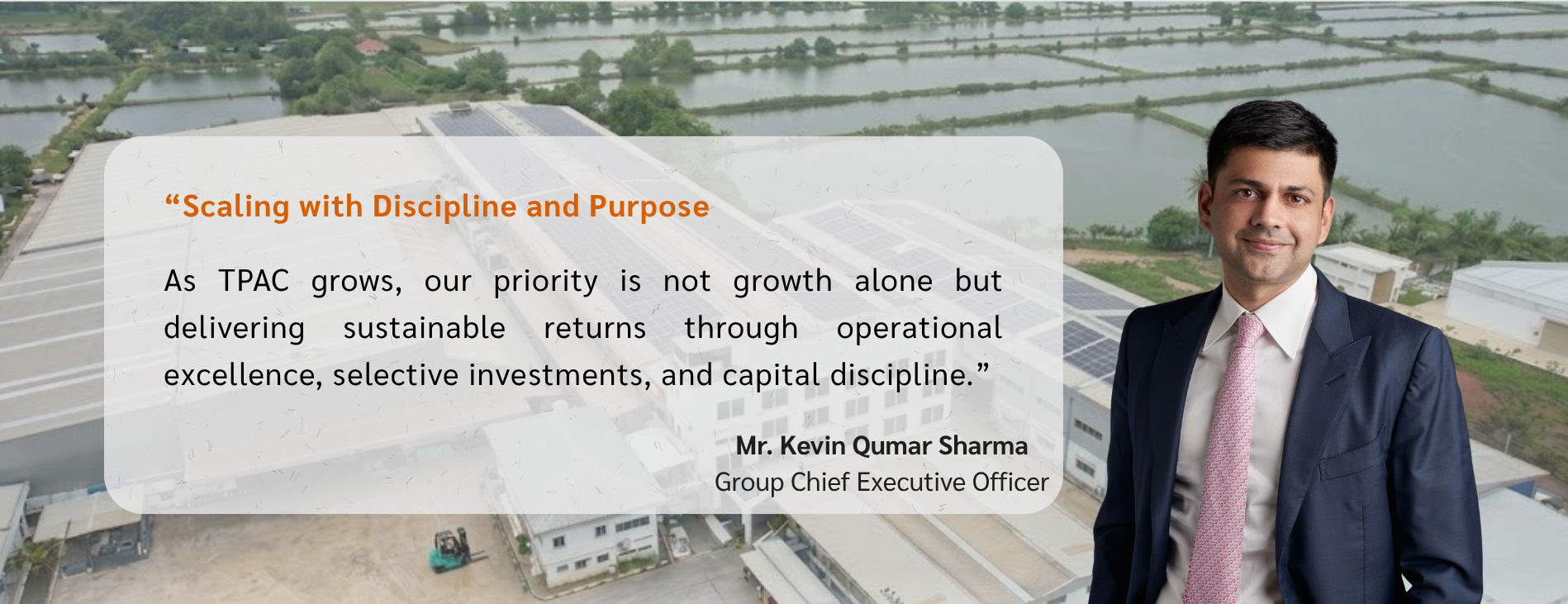
Dear Shareholders, TPAC is entering a defining phase of its journey. Over the past decade, we have built Asia’s fastest growing rigid plastics packaging platform, expanding across geographies, customers, and capabilities. That phase of rapid expansion has created scale. We are now transitioning to the next phase: building a world-class, high-performance platform capable of delivering consistent, compounding returns. Growth alone is not our objective. TPAC will not pursue growth for the sake of growth. We do not subscribe to the fallacy that top-line growth alone creates value. In our industry, undisciplined growth, without control over costs, operations, and returns, destroys value. We are also cautious of large, headline driven acquisitions where complexity and integration risk often destroy value. Our focus is on transactions where we have control, clarity, and a clear path to operational improvement and value creation post-acquisition. This means being highly selective: where we do not have a clear path to returns, the answer is no, simple. This discipline has shaped our M&A track record to date. Our M&A strategy remains focused and disciplined:
Quality of earnings, consistency of execution, and return on capital will define TPAC going forward. Our industry does not reward inconsistency. Reliability is the product. We are therefore driving a sharper operating model across the Group:
Ultimately, our focus is on converting this discipline into stronger cash generation and sustainable returns. Margin stability is not a given in our industry. It must be monitored in real time, daily. We are getting there. Future value creation will come from capability depth, not just footprint expansion. Key priorities now include:
Across our businesses, we are institutionalizing systems that can scale beyond individuals. This is a deliberate move up the value chain: into design-led engineering, tighter tolerances, and high-specification applications where reliability and performance are critical. This requires:
Trust is earned through consistent performance. 2025 was another year where we made progress in earning that position. The current global environment is volatile. Our approach is on maintaining strong cash discipline. We will use periods of disruption to strengthen our competitive position. We are building TPAC with a clear long-term objective: to create a high-quality, scalable platform capable of delivering superior returns and commanding global credibility. This will be driven by:
We are not optimizing for short-term optics. We are building for long-term value creation. I would like to thank our employees, customers, and shareholders for their continued trust. The next phase of TPAC is about raising the bar: design led engineering, tight tolerances, and operating in segments and SKUs where the cost of failure is zero. We are now entering this exciting phase. Mr. Kevin Qumar Sharma Group Chief Executive Officer Thai Plaspac Public Company Limited |
Material Changes & Developments
Material Changes & Developments
| Year | Description |
|---|---|
| 1,983 | The Company was founded with one factory located in Sathupradit, and continuity expanded. |
| 2,004 | Increased the paid-up capital from THB 40 million to THB 80 million and converted into the public company limited with the registered capital THB 100 million which divided in to 100 million shares with the par value at THB 1 per share. |
| 2,005 | Thailand Security and Exchange Commission and Stock Exchange of Thailand allowed the Company to do the initial public offering and listed in MAI market since December 7th, 2005. |
| 2,013 | The Company had increased its registered capital to be THB 255 million divided into 255 million shares with the par value at THB 1 per share (paid-up capital at THB 200 million) and issued the 3 years warrants 55 million units and 3 years Employee Stock Ownership Plan (ESOP) 5 million units. |
| 2,014 | There were the shaerholders excersied both warrants and ESOP during the year 2014, totalling 1,141,500 units which effected the paid-up capital as of December 31st, 2014 increased to THB 201,327,025. |
| 2,015 |
|
| 2,016 | There were the shaerholders excersied both warrants and ESOP during the year which the maturity date of the warrants was on May 19th, 2019, totalling 45,051,276 units which effected the paid-up capital as of December 31st, 2019 increased to THB 253,817,676. These warrants were excercised totalling 98% of the issued warrants. |
| 2,017 |
|
| 2,018 |
|
| 2,019 |
|
| 2,020 | On October 22rd, 2020, the Company has acquired the remaining 20% shares in TPAC Packaging Private Limited. |
| 2,021 |
|
| 2,022 |
|
| 2,023 | On September 4th, 2023, the Company registered the subsidiary in the Philippines under the name of TPAC Packaging Philippines Inc. and invested at 100% of its shares. |
| 2,024 |
|
| 2,025 | In 2025, TPAC strengthens its UAE presence with a third manufacturing facility in the SAIF Zone, laying the foundation for organic growth and future regional expansion. 1 production site added. And CRM implemented across TPAC, enhancing customer management and driving business growth. |
Use of Proceeds from Securities Offerings
Is There Money Raised from a Securities Offering Still to Report On?
No
Commitments Made in the Registration Statement
Are There Commitments or Conditions from an Offering or Listing?
No
Group Operating-Structure Policy
Description
Thai Plaspac Public Company Limited (the “Company”) operates its business through a group of companies both domestically and internationally in order to enhance operational efficiency, expand business opportunities, and support growth in regional markets. The roles and responsibilities of each company within the Group are allocated according to the nature of the business, areas of expertise, and geographical markets.
The Company is responsible for setting policies, business strategies, and overseeing the management of the Group companies to ensure that all operations are aligned with the same direction and consistent with the Group’s objectives and growth plans. Meanwhile, the subsidiaries are responsible for conducting their respective business operations, including manufacturing, product development, distribution, and market expansion in the countries where they operate.
In addition, the companies within the Group coordinate and support one another in various areas such as raw material procurement, production technology, quality management, and product development. This collaboration aims to enhance operational efficiency, reduce costs, and strengthen the overall competitiveness of the Group.
Companies Where the Company Holds ≥10%
Companies (≥10% Holding)
| Company Name | Address | Province | Zip Code | Telephone | Fax | Business Type | Security Type | Shares | Paid-up Shares |
|---|---|---|---|---|---|---|---|---|---|
| TPAC Packaging (Bangna) Company Limited | 75/2 Moo 9 Soi Ruamjai Bangna-Trad Road Km.18.8, Bangphli | Samut Prakarn | 10540 | 02-264-0777 | - | Manufacture rigid plastic packaging | Common shares | 10,143,137 | 10,143,137 |
| TPAC Packaging India Private Limited | 901, 9th Floor, Arena Space, Plot no 20, JVLR, Near Majas Depot, Jogeshwari East, Mumbai, Maharashtra, India | Foreign country | 40006 | - | - | Manufacture rigid plastic packaging | Common shares | 256,769,575 | 256,769,575 |
| Sun Packaging Systems (FZC) | 600 M2 Warehouse B3-01,02&03 Plot Of Land T3-02,03,04&05 P.O.Box 7784, Sharjah, United Arab Emirates | Foreign country | - | +971-6557-3426 | - | Manufacture rigid plastic packaging | Common shares | 450,000 | 450,000 |
| Combi-Pack Sdn Bhd | 277, Jalan Haruan 1, Oakland Industrial Park, Seremban, Negeri Sembilan Malaysia | Foreign country | 70300 | +60 6-761-1268 | - | Manufacture rigid plastic packaging | Common shares | 2,000,000 | 2,000,000 |
| TPAC Packaging Philippines Inc. | Block 30 Lot 21B Quezon Road Global Asena Business Park 2 San Pablo Libutad, San Simon, Pampanga, Region III (Central Luzon), Philippines. | Foreign country | 2015 | - | - | Manufacture rigid plastic packaging | Common shares | 1,623,432 | 833,375 |
| TPAC Global Holdco Limited | Office 6 , Level 11 Tamouh Tower, Tamouh,Abu Dhabi, Al Reem Island, United Arub Emirates | Foreign country | - | - | - | Holding Company | Common shares | 200 | 200 |
| TPAC Custom Solutions Private Limited | 901, 9th Floor, Arena Space, Plot no 20, JVLR, Near Majas Depot, Jogeshwari East, Mumbai, Maharashtra, India | Foreign country | 40006 | +91-2-226-861-701 | Manufacture rigid plastic packaging | Common shares | 20,000,000 | 4,000,000 | |
| TPAC Skypet India Private Limited | 901, 9th Floor, Arena Space, Plot no 20, JVLR, Near Majas Depot, Jogeshwari East, Mumbai, Maharashtra, India | Foreign country | 40006 | +91-2-226-861-701 | Manufacture rigid plastic packaging | Common shares | 5,000,000 | 2,500,000 |
Income Structure
Product / Service Income
| Category | Description | This Year | This Year % | Last Year | Last Year % | 2 Years Ago | 2 Years Ago % |
|---|---|---|---|---|---|---|---|
| Total revenue from operations | Total revenue from operations | 6,821,418.09 | 100 | 7,213,886.64 | 100 | 6,804,120.42 | 100 |
| FOOD & BEVERAGE | 5,252,491.93 | 77 | 5,410,414.98 | 75 | 5,375,255.13 | 79 | |
| PHARMACEUTICAL & PERSONAL CARE | 1,023,212.71 | 15 | 1,154,221.86 | 16 | 952,576.86 | 14 | |
| INDUSTRIAL & HOMECARE | 545,713.45 | 8 | 649,249.8 | 9 | 476,288.43 | 7 | |
| Other | Other | 0 | 0 | 0 | 0 | 0 | 0 |
Export Income
| Category | Description | This Year | This Year % | Last Year | Last Year % | 2 Years Ago | 2 Years Ago % |
|---|---|---|---|---|---|---|---|
| Total revenue | Total revenue from operations | 6,821,418.09 | 100 | 7,213,886.64 | 100 | 6,804,120.42 | 100 |
| Domestic | Domestic | 1,909,004 | 27.99 | 2,034,399.38 | 28.2 | 1,864,850 | 27.41 |
| International | International | 4,912,414 | 72.01 | 5,179,487.26 | 71.8 | 4,939,270 | 72.59 |
Other Income
| Operating Other Income | Non-Operating Other Income | Share of Profit |
|---|---|---|
| 1710 · As of year: 43350.14 · Description: Total other income · As of yesteryear: 79552.93 · As of year before yesteryear: 94679.94 · 1711 · As of year: 69434.77 · Description: Other income from operations · As of yesteryear: 85086.41 · As of year before yesteryear: 89232.04 | 1712 · As of year: -26084.63 · Description: Other income not from operations · As of yesteryear: -5533.48 · As of year before yesteryear: 5447.9 · -26084.63 · Description: Gain on exchange · As of yesteryear: -5533.48 · As of year before yesteryear: 5447.9 | 1713 · Description: Share of profit |
Product / Service Characteristics
Introduction
We divided our packaging product into 3 categories:
Food & Beverage
Pharmaceutical & Personal care
Industrial & Homecare
Business Type
3114
Business Groups
| Business Group | Description |
|---|---|
| Food & Beverage Packaging | Food & Beverage Packaging our Food & Beverage business can be divided into 5 sub-sectors. 1.Dairy & Coffee The diary business packaging solutions are mainly for milk and yogurt products. Milk packaging includes small individual sized bottles up to large multi gallon bottles as well as specialty closure. Yogurt packaging includes thin-walled cups and bottles. We are also active in the coffee market with products including screw top caps and bottles for coffee powder and beans. 2. Edibles Our edibles business caters to solutions for candy & gums, nuts, and edible oils. 3. Condiments Comprise packaging solution for jam, margarine, ketchup, (oyster, chili, soya) sauces, and other food condiments. Products include squeezy bottles and closure systems for sauce dispensing. Closure systems can range from internal tamper evident flip top caps, external tamper evident flip top caps and closures with a broad range of orifice sizes. Specialized barrier properties to the bottles may be required into mitigate any effects of oxidation to the filled product. 4.Tableware Products Disposable cutlery, salt and pepper bottles and dispensers’ systems are amongst the core products offered for this category. 5.Niche Beverage Here we cater to the non-water and carbonated soft drink beverage market. For example, we recently worked with premium brands in the coconut water, green tea and vitamin water markets. Our customized designed beverage bottles and closures are likely to differ in size and shape from the more commonly seen commoditized water bottles and closures in the market. |
| Pharmaceutical & Personal care Packaging | Packaging solutions here comprise of bottles and closure systems for mouthwash and antiseptic solutions, nutraceutical supplements, soaps and shampoos, body and spa oils, and deodorants. |
| Industrial & Homecare packaging | Consists of bottles and caps for floor cleansing and sanitary ware products,perfume deodorant cartridge, air freshener cap, insect repellent spray cap, disinfectant bottle as well as household cleaning appliances such as floor brushes, etc.These products require a high degree of chemical resistance. The characteristics of the plastics applied here include a high level of heat and impact resistance. |
Research & Development
Has R&D Policy (Y/N)
Yes
R&D Cost — Description
The Company places importance on product development, focusing on promoting new product innovations and innovations in the production process to meet customer needs and enhance competitiveness and business growth in line with the Company's business strategy. It also supports business operations to achieve sustainable goals and be prepared for future changes.
The Company has the following guidelines for product research and development:
Resource Selection
The Company primarily uses plastic pellets that can be recycled and studies the feasibility of using Light weight, Recycled plastic, and Biodegradable plastic pellets as raw materials for packaging production.
Production Process
Develop the production process by selecting high-efficiency machinery and equipment, using machines that can reduce energy consumption, increase productivity, and reduce waste generation while maintaining product quality and safety according to production standards.
Product Usage
The Company has a New Product Development team that provides consultation on design and product usage according to customer requirements. Additionally, the Company focuses on developing environmentally friendly and low-carbon products. We place great importance on the appropriate use of products for maximum benefit.
End-of-Life Management
As a plastic packaging manufacturer, the Company recognizes the importance of waste management at the end of product life. The Company is committed to studying and developing packaging that can naturally decompose to help manage products at the end of their life cycle and reduce waste generation.
Technology Investment
The Company focuses on improving efficiency and effectiveness in production by investing in modern and environmentally friendly production technologies, such as investments in automated systems, energy management systems, and clean production technologies. In addition, the Company also encourages and develops personnel to have appropriate knowledge and skills in utilizing technology. The Company also applies the concept of Industry 4.0 to its production processes. This includes the implementation of automation systems, digital manufacturing systems for monitoring and controlling production, and data analytics to improve production efficiency. These initiatives aim to enhance operational efficiency, reduce resource consumption, and increase production flexibility, enabling the Company to respond to customer needs more quickly and accurately.
R&D Cost — Label
Research and development (R&D) expenses over the past 3 years (Million Baht)
R&D Cost — This Year
47.91
R&D Cost — Last Year
12.64
R&D Cost — 2 Years Ago
3.63
Assets Used in the Business
Permanent Assets — Description
As of December 31, 2025 fixed assets used in the Group business operations have net book value after deducting accumulated depreciation and provision for impairment as shown in the Company’s consolidated financial statements, with details are as follows:
Permanent Assets — Appraisal
| Asset | Ownership | Obligation | Appraisal Value | Description |
|---|---|---|---|---|
| Land and land improvement | Owner | None | 322,826,000 | - |
| Building and building improvement | Owner | None | 452,976,000 | - |
| Building and building improvement | Owner | None | 19,048,000 | |
| Machinery and equipment | Owner | None | 1,560,567,000 | |
| Motor vehicles | Owner | None | 10,476,000 |
Intangible Assets — Description
As of December 31, 2025, intangible assets are assets that cannot be seen or physically touched and have no physical substance, but they can be valued in monetary terms. These include trademarks, customer relationships, non-compete agreements, and computer software, among others. As presented in the Company’s consolidated financial statements, the details are as follows.
Intangible Assets — Appraisal
| Asset | Type | Type (if Other) | Appraisal Value | Description |
|---|---|---|---|---|
| Tradename | Trademark | 147,699,000 | - | |
| Customer relationship | Others | Customer relationship | 190,782,000 | - |
| Non-compete agreement | Others | Non-compete agreement | 2,018,000 | - |
| Computer software | Software | 2,121,000 | - |
Has Subsidiaries Investment Policy (Y/N)
Yes
Subsidiaries Investment Policy — Description
The Company aims to expand business opportunities and create added value for the organization in order to achieve its business goals and strategic objectives. The Company focuses on investing in businesses that align with its core strategies, taking into consideration growth potential, financial feasibility, and the ability to generate profitability, particularly in the packaging industry as well as innovation and technology sectors.
The decision-making process for investments in subsidiaries and associated companies is conducted through thorough analysis, impact assessment, and risk evaluation. Such decisions are reviewed and approved through meetings of the Board of Directors. In doing so, the Company places importance on risk diversification and the creation of long-term returns for shareholders. The operational guidelines are as follows:
The Board of Directors appoints individuals to serve as directors, executives, or persons with controlling authority in subsidiaries.
The Board of Directors defines the scope of duties and responsibilities of the Company’s representatives as stated in Item 1, and ensures that these representatives oversee the operations of subsidiaries in accordance with the Company’s policies.
Appropriate and effective internal control systems are established within subsidiaries to ensure that operations and transactions are conducted correctly and in compliance with applicable laws.
Material information relating to financial reports and operating results must be disclosed accurately and in a timely manner. This includes related-party transactions, acquisition or disposal of assets, other significant transactions, as well as capital increases, capital reductions, or the dissolution of subsidiaries, as applicable.
Marketing Policy & Competition
Reporting Mode
3117
Marketing Policy (Overall)
The Company conducts its business with responsibility toward customers by maintaining the quality, standards, and safety of its products and services throughout the entire production process under internationally recognized certifications. The Company has obtained Food Safety System Certification 22000 (FSSC 22000) and ISO 22000:2018 for food safety management, as well as ISO 9001:2015 for quality management systems, ensuring that customer needs and expectations are fully met. The Company systematically collects feedback, suggestions, and complaints, which are analyzed together with relevant external factors such as market competition, technological developments, consumer behavior trends, government policies, regulations, and economic data, to support the development and design of products and services that address both current and future customer requirements. A structured complaint handling process is in place to investigate root causes, implement corrective actions, and communicate outcomes to all customers, including long-term preventive measures to strengthen trust and sustainable satisfaction. The Company also conducts annual customer satisfaction assessments covering product quality, services, and delivery performance. The results are used to develop improvement plans and continuously enhance customer relationships. For customers whose satisfaction scores fall below the 70 percent target, a dedicated Customer Relationship Management (CRM) action plan is implemented to improve satisfaction levels. In addition, the Company places great importance on protecting customers’ personal data and confidential business information by establishing policies and measures to prevent unauthorized access, use, or disclosure, and by continuously enhancing employees’ awareness of cybersecurity in compliance with the Personal Data Protection Act B.E. 2562 (2019). During the reporting year, no incidents of customer data breaches were reported.
Industry & Competition (Overall)
The plastic packaging industry has continued to experience increasing competition. As a result, industry participants must continuously adapt to evolving market trends and changing customer demands. Key factors influencing competition within the industry include the development of environmentally friendly products and the advancement of packaging innovations that respond to changing consumer behaviors.
From an environmental perspective, manufacturers are placing greater emphasis on developing packaging solutions that reduce environmental impact. This includes the use of bio-based plastics (Bio-plastics), increasing the proportion of recycled materials, and aligning operations with the goal of achieving net zero greenhouse gas emissions (Net Zero Emissions). At the same time, packaging producers are continuously developing innovative products to meet the evolving needs of consumers, particularly in terms of convenience, extended product shelf life, and maintaining product quality.
In addition, an analysis of trends in key raw material prices indicates that prices have experienced fluctuations in recent periods. However, the overall trend has begun to stabilize and improve, which is expected to support the continued growth of the plastic packaging industry in the future.
With more than 40 years of experience and expertise in the packaging industry, the Company has developed a deep understanding of the characteristics and applications of various packaging materials. This enables the Company to effectively develop and manufacture packaging products that meet the diverse needs of customers across multiple industries. The Company utilizes modern production machinery and advanced manufacturing technologies, importing equipment from leading global manufacturers, while maintaining strict quality control throughout every stage of the production process to ensure that products meet established quality standards.
Furthermore, the Company places strong emphasis on the continuous improvement of its production processes in order to enhance operational efficiency and reduce product delivery lead time. At the same time, the Company focuses on efficient management of resources and raw materials to maximize operational effectiveness, minimize environmental impacts, and strengthen its long-term competitive capabilities.
As a result of these efforts, the Company is able to produce high-quality packaging products that meet required standards while ensuring timely delivery to customers. This enables the Company to effectively respond to diverse customer needs and continuously strengthen its reputation as a reliable and trusted business partner.
Procurement of Products & Services
Reporting Mode
3117
Procurement (Overall)
In the past year, the Company obtained products for sale through both its internal production processes and procurement from external manufacturers or distributors. Business partners are selected based on criteria such as product quality, production standards, pricing, and the ability to deliver goods reliably. In addition, the Company has implemented appropriate product quality control systems and supply chain management to ensure efficient delivery of products to customers.
Raw Material Acquisition (Overall)
The Company’s key raw materials used in packaging production include various types of virgin plastic resins procured from both domestic and international suppliers, recycled plastic resins, and color masterbatch used in the production of different types of plastic packaging. The Company sources these raw materials from suppliers both locally and internationally to ensure sufficient supply, consistent quality, and continuity in production. Details of each type of raw material procurement are as follows:
1. Virgin Resin
The primary raw materials used in production are plastic resins, mainly Polyethylene (PE). These can be categorized into several main types, including High Density Polyethylene (HDPE) and Low Density Polyethylene (LDPE). In addition, the Company also uses other types of plastic resins such as Polypropylene (PP), Polyethylene Terephthalate (PET), and Oriented Polypropylene (OPP) for certain packaging applications.
Currently, the Company procures plastic resins from more than 10 suppliers both domestically and internationally. This supplier diversification helps reduce supply risks and ensures that the Company has not experienced shortages of virgin plastic resins used as key raw materials in its production processes.
2. Recycled Plastic Resin (rPET)
The Company sources recycled plastic resin (rPET) from more than three suppliers both domestically and internationally for use in the production of certain packaging products. The Company places strong emphasis on selecting high-quality materials that have undergone proper sorting and recycling processes in accordance with established standards. This ensures that the recycled materials used meet the quality requirements of the Company’s products.
The use of recycled plastic resin is also part of the Company’s commitment to sustainable business practices. It promotes efficient resource utilization, reduces plastic waste, and helps minimize environmental impacts associated with the production process.
3. Color Masterbatch
Color masterbatch is used to adjust the color and enhance the properties of plastic packaging products in accordance with customer requirements. The Company sources masterbatch from manufacturers and suppliers both domestically and internationally to ensure product quality and compatibility with its production processes.
Production Policy (Overall)
-
Distributors (Overall)
The Company’s key suppliers consist of manufacturers or distributors that provide raw materials and products with reliable standards. The Company maintains long-term business relationships with these suppliers as business partners. Suppliers are selected and evaluated based on criteria such as product quality, production standards, pricing, and delivery capability. In addition, the Company periodically conducts supplier audits to ensure that suppliers comply with the Company’s quality standards and requirements.
Number of Raw-Material Distributors (Overall)
10
Production Capacity (Overall)
| Item | Unit | Used | Capacity |
|---|---|---|---|
| - | Ton | 0 | 0 |
Domestic/Overseas Purchase Proportion (Overall)
| Raw Material | Source Country | Value |
|---|---|---|
| - | Thailand | 0 |
| - | Other | 0 |
Projects Under Construction
Has Projects Under Construction (Y/N)
No
Debentures & Bills of Exchange
Has Debentures (Y/N)
No
Convertible Securities
Has Convertible Securities (Y/N)
No